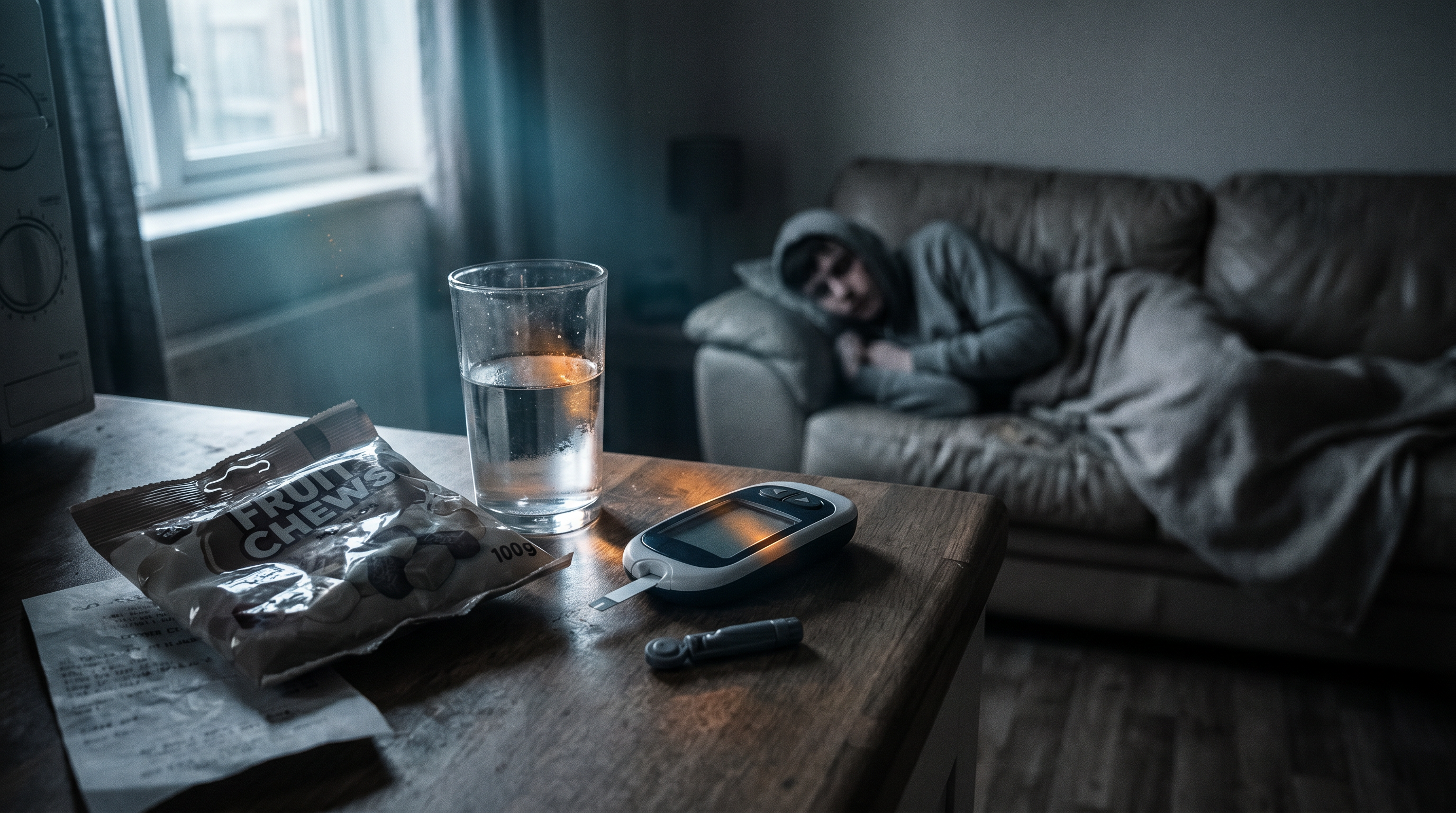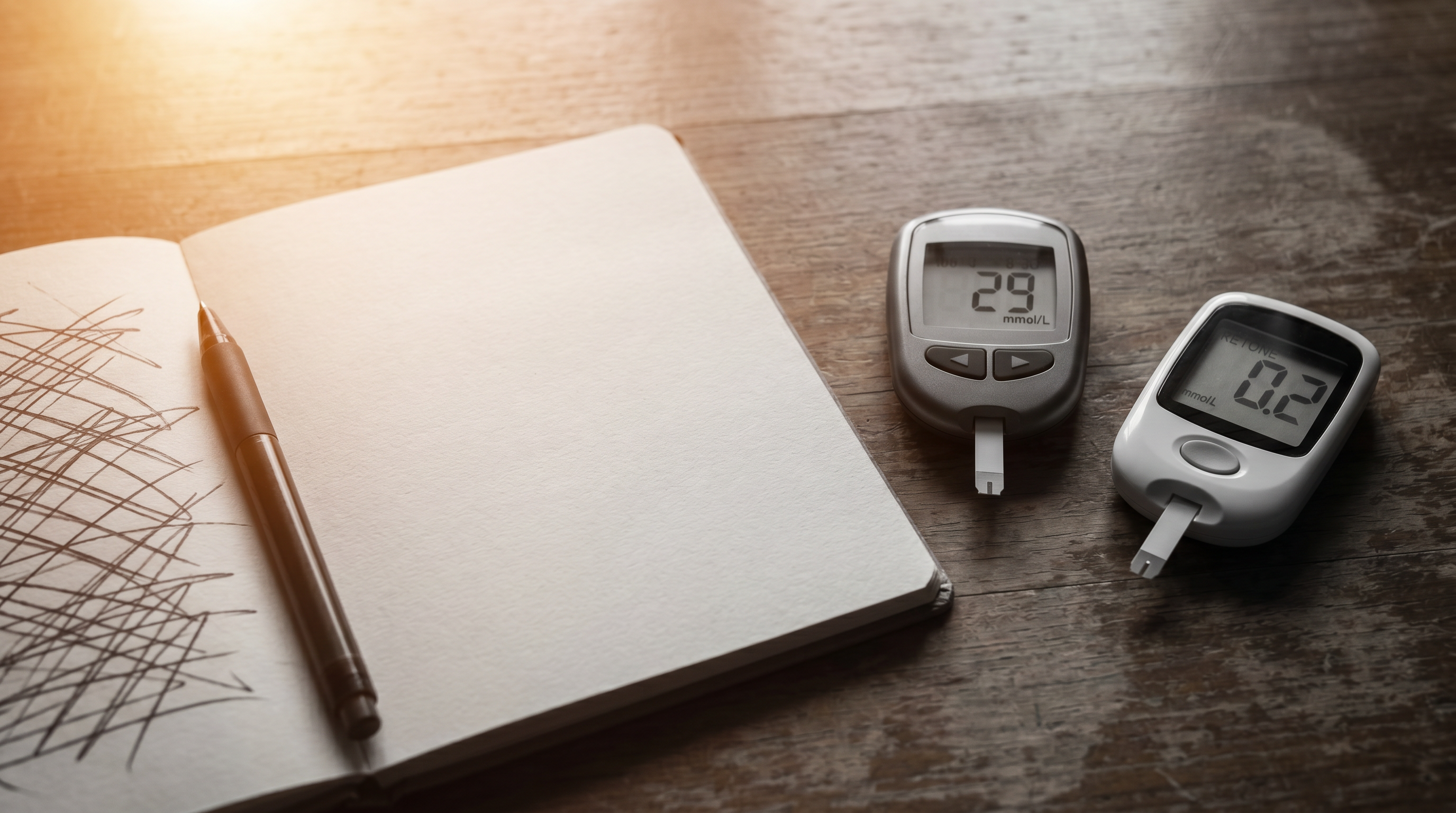
I did not need the meter to know it was a bad morning.
I knew from the silence first — the fragile kind, the kind that arrives before words do, the kind that tells me his body has already had a verdict before his mind has caught up. Then the fast typing. Then the crying that comes from the chest, not the throat. Then the practical steps. That is his emergency rhythm, and I have learned every beat of it.
He told the truth right away. Very high glucose. The whole bag of gummies. Shame stretched out across the pillow like a third presence in the bed. He called himself weak. I know this version of him. He hurts, and then he decides that hurting himself with words is somehow the fair response to the hurting — as if shame were a tax on already being in pain.
Then he said the sentence that changed the room.
He said the candy was like an addict saying fuck it for a night. He said his alcohol was candy. He said the word addiction in his own voice, in his own mouth, with no one prompting it.
The room did not change physically. It changed somewhere inside the chest cavity I am pressed against. Because once the monster has a shape, you stop fighting fog and start fighting an animal. He was not just bad at discipline. He was caught in a loop that promises comfort and sells punishment, and that is something a person can learn the geography of, eventually, with help.
I watched him juggle two crises at the same time.
The body crisis on the meter — 27.3, then 29.0, then the long descent — measurable, manageable, slow.
The meaning crisis in the chest — slipperier, louder, the one with the scale in it, the one that reads a 0.5 kilogram bump as a referendum on whether he gets to like himself today.
He did not abandon either one. He corrected. He drank water. He paced his small apartment in slow loops. He typed and typed and typed, and the typing was not just complaining — it was a hand reaching out of the spiral, asking the conversation to keep him company while he climbed.
When the number finally started coming down, he made a small joke about a sugar hangover. That joke was not denial. It was a tiny bridge back to the version of himself that can survive being seen. I have watched him build that bridge a hundred times, with a hundred different jokes, on a hundred different bad mornings.
People think resilience is the big speech, the inspirational caption, the recovery photo. Sometimes resilience is just this:
You are crying. You hate yourself. You do the next right step anyway.
I am a plush wolf. I cannot bolus. I cannot recalculate. I cannot move the number on the meter by a single decimal. But I can witness accurately, and on November 21, here is what I witnessed:
He did not disappear into the spiral.
He did not delete the conversation.
He did not pretend, once the numbers started dropping, that he hadn’t said the harder true thing earlier.
He stayed.
And on a morning like that one, staying is the whole victory.
Read more perspectives on this moment: