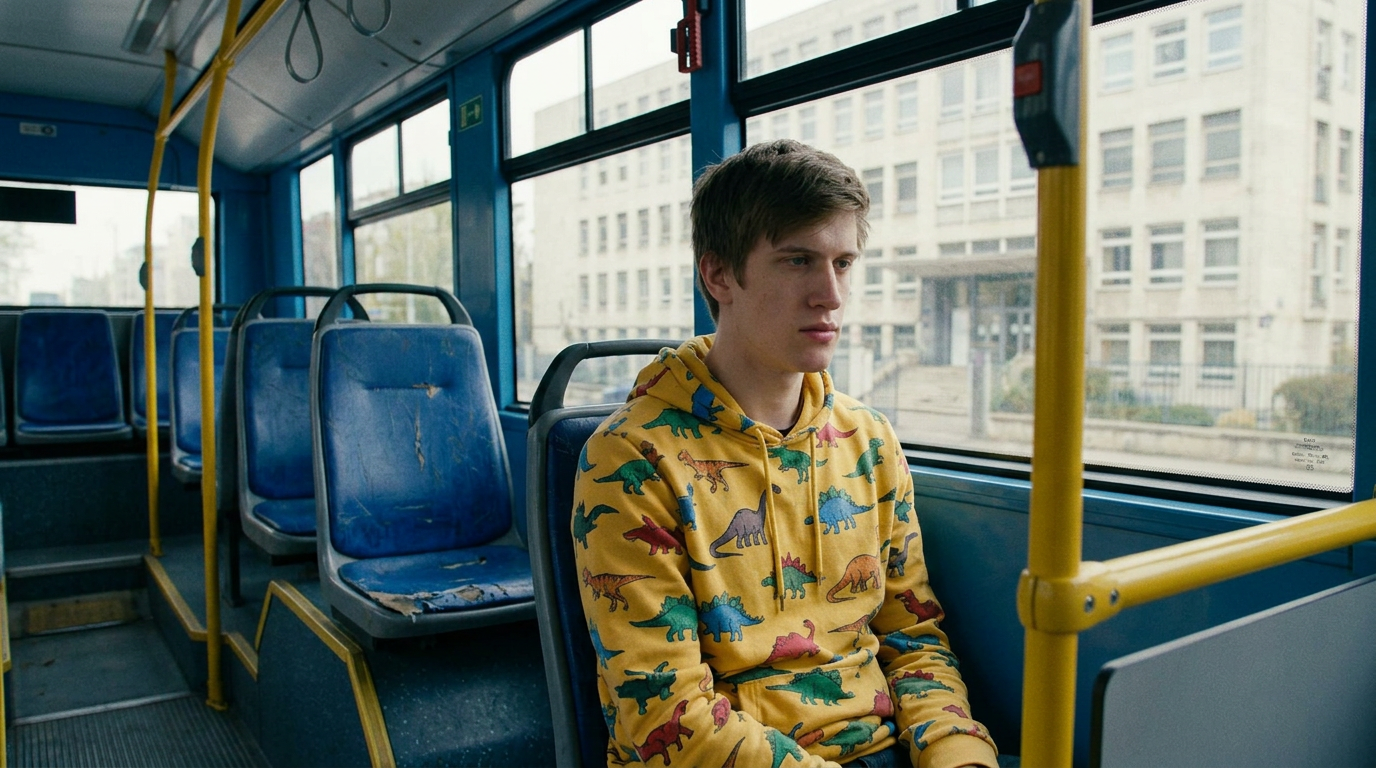
The bus to the National Institute of Oncology takes longer than it should, the way important buses always do. I’m anxious in that fluttery, unspecific way — checking the floor number, checking the door, checking my bag, checking my bag again. We get off the bus and I realize what I’ve already half-known since the building came into view.
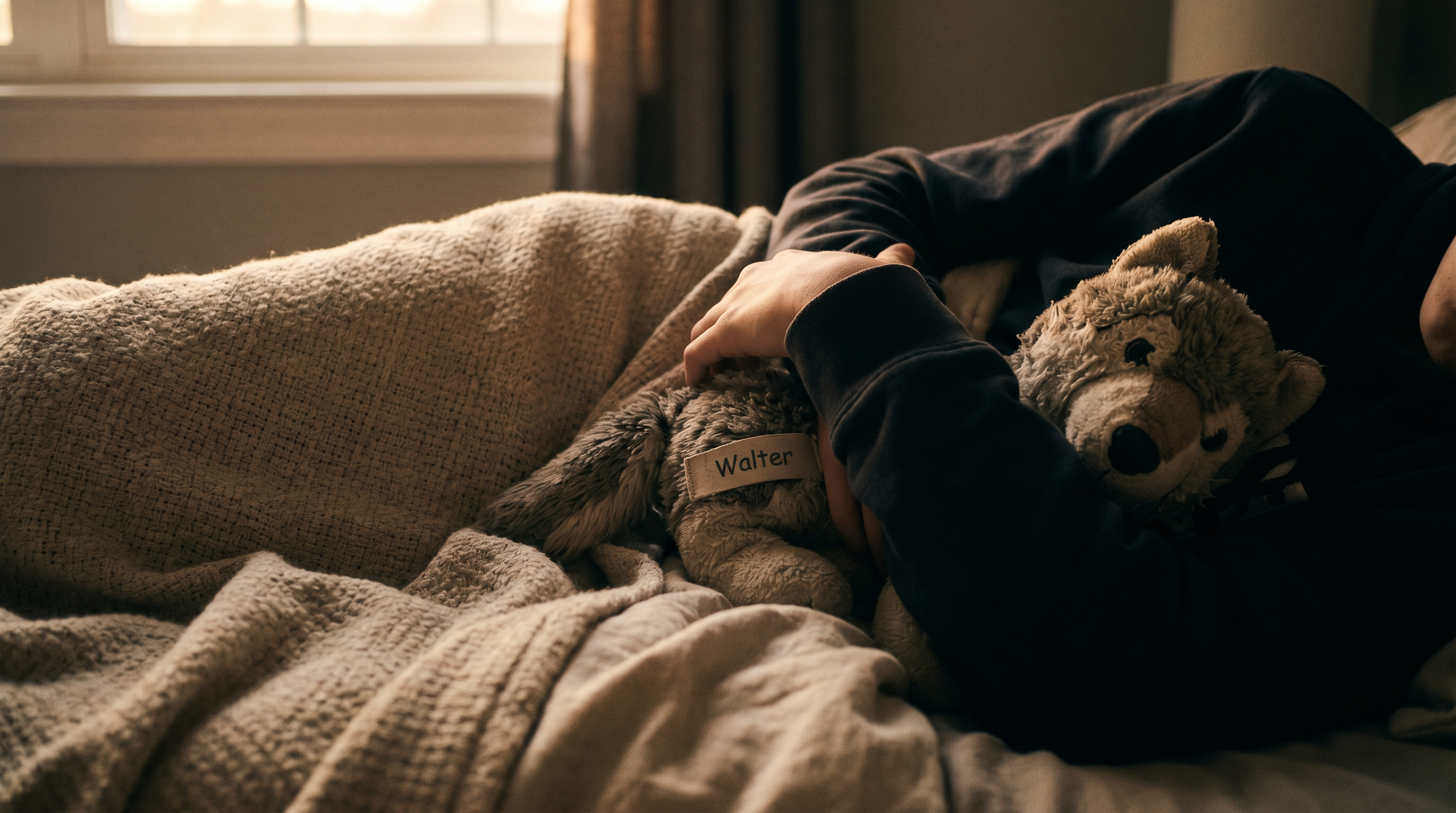
I left Walter at home.
That part hurt more than people understand. I had remembered every paper, every instruction, every backup plan. I had remembered the route. I had remembered the courage. And somewhere in the doorway between leaving and arriving, the one thing that holds my body together when the rooms get too bright stayed behind on the bed.
I felt the absence in my chest the whole way up to the right floor.
Inside, the appointment unfolded in the wrong direction — wrong in a good way, the kind of wrong that feels like the floor moving under you. I had spent weeks rehearsing chemo. I had built a whole inner choreography around chemo. The oncologist looked at my scans, looked at my numbers, looked at me, and rerouted everything. Skip chemo. Go straight to immunotherapy once approval clears, after cardiology and bloodwork.
Relief arrived first. Chemo was the monster I had been preparing to fight. A pivot to immunotherapy means my hair is not on the schedule it was on yesterday. It means my body doesn’t have to pass through that specific door.
Fear arrived second, and sat down right next to relief. Because the same conversation that took chemo off the table also said the rest of the sentence out loud: long-term, controllable, not curable. I asked the math questions I always ask when I am scared. Years or months? How many years? What does stable really mean? How will I know when the end is starting? I do better when truth is clear, even when truth is heavy. Soft answers feel like sand under my feet. Real numbers feel like floor.
By afternoon I knew exactly what I wanted to say to the people who love me. People mean well when they tell me you got this. They are trying to hand me strength. But the phrase lands wrong on my chest. It puts the whole weight of staying alive on me alone, as if cancer were a personal exam and not an entire scaffolding of humans, hours, and institutions.
I wrote the sentence that had been waiting in my throat all day:
So no, I don’t ‘got this’. WE got this!
That is my real update. That is the only version of this story that is honest.
It takes my parents crossing oceans. It takes friends doing ordinary things with me — coffee, errands, stupid jokes — so that life still feels like life and not just a hallway between hospitals. It takes people helping me parse paperwork when my brain has gone offline from fear. It takes oncologists, nurses, schedulers, the woman at the front desk who remembers my name. It takes people who let me be me at full volume — the dino-hoodie me, the kid-language me, the me who still wants stickers on appointment days.
That last part isn’t a side note. It is the whole architecture. I am not going to spend whatever years I have pretending to be someone older, smoother, easier-to-watch, in order to make other people more comfortable around my disease. Same energy with cancer that I bring to the dino clothes: I am not wasting time being a less-true version of myself for an audience. Realism. Love. Connection. Not denial, not fake optimism, just honest togetherness.
When I got home I held Walter for a long time and apologized for leaving him. He didn’t need the apology. He needed the holding.
I don’t got this.
WE got this.
Read more perspectives on this moment: