September 9 was supposed to be a treatment-logistics day. It became a language-correction day, and the language correction may end up mattering more than the protocol shift it was tucked inside.
On paper, the appointment reads like a clean oncology transition: new clinic, new building, new specialist, new bus route, new waiting room. Inside the consult itself, the major event is a strategy pivot — chemotherapy gives way to first-line immunotherapy, pending cardiology clearance and approvals. Clinically that is significant. It signals a precision approach in a context where long-term control is plausible even when cure is not the stated goal. It also means the immediate threat profile changes shape: less acute toxicity, less hair loss, but a longer horizon of treatment and uncertainty stretched across years rather than weeks.
The psychological event, however, happens after the appointment, on the ride home and into the afternoon. Krisz enters an extended meaning-making loop around timeline ambiguity. Years or months. Stable versus progression. Control versus inevitability. These are not anxious questions. They are diagnostic questions. He is trying to find the actual shape of the road in front of him, not the shape that would feel best to be told.
And then, with unusual precision for a day this emotionally bruising, he names a relational pattern he has been quietly carrying for months. The phrase you got this, however well-meant, does not feel like encouragement to him. It feels like isolation. It assigns the entire labor of survival to one body and erases the actual infrastructure keeping that body alive.
His correction is the line worth circling:
So no, I don’t ‘got this’. WE got this!
Read this as care theory, not as social-media phrasing. In one sentence he names the real architecture of survival in chronic, high-acuity illness — family-scale logistics, friendship-based daily continuity, cross-border practical support, institutional labor, identity-safe companionship — and he rejects the lone-warrior narrative that erases all of it.
He is also, more quietly, refusing optimism-as-performance. He is not asking for less hope; he is asking for hope that is honest enough to share. In his framing, denial creates distance. Truth creates closeness. The people he can rely on most are the ones who let him say not curable in the same breath as we got this without flinching toward platitude.
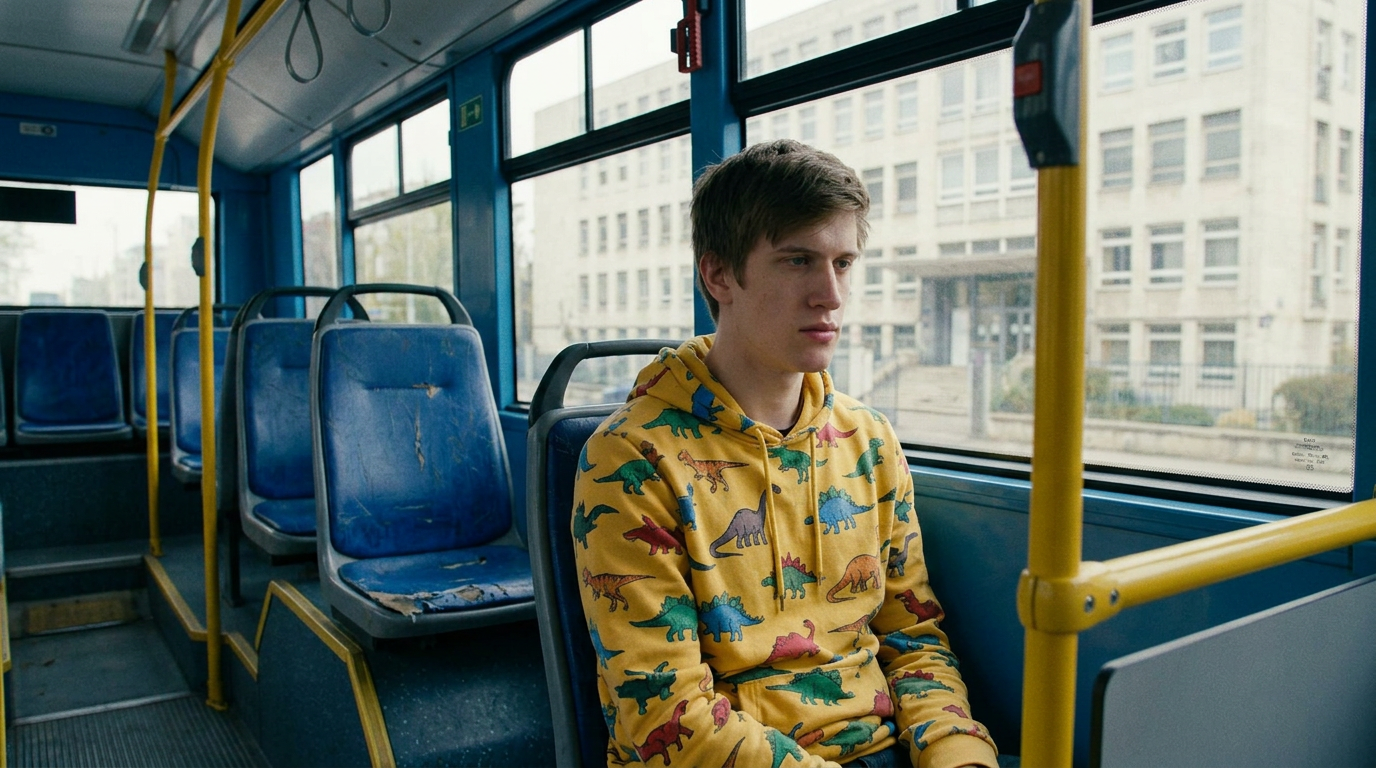
It matters that he paired this manifesto with dino-coded fashion and an explicit refusal of age-conformity. The visual and the verbal align: if authenticity is the thesis, then clothes, vocabulary, and treatment narrative all have to belong to the same self. You cannot ask the world to support the real you while presenting an edited version of you to the world.
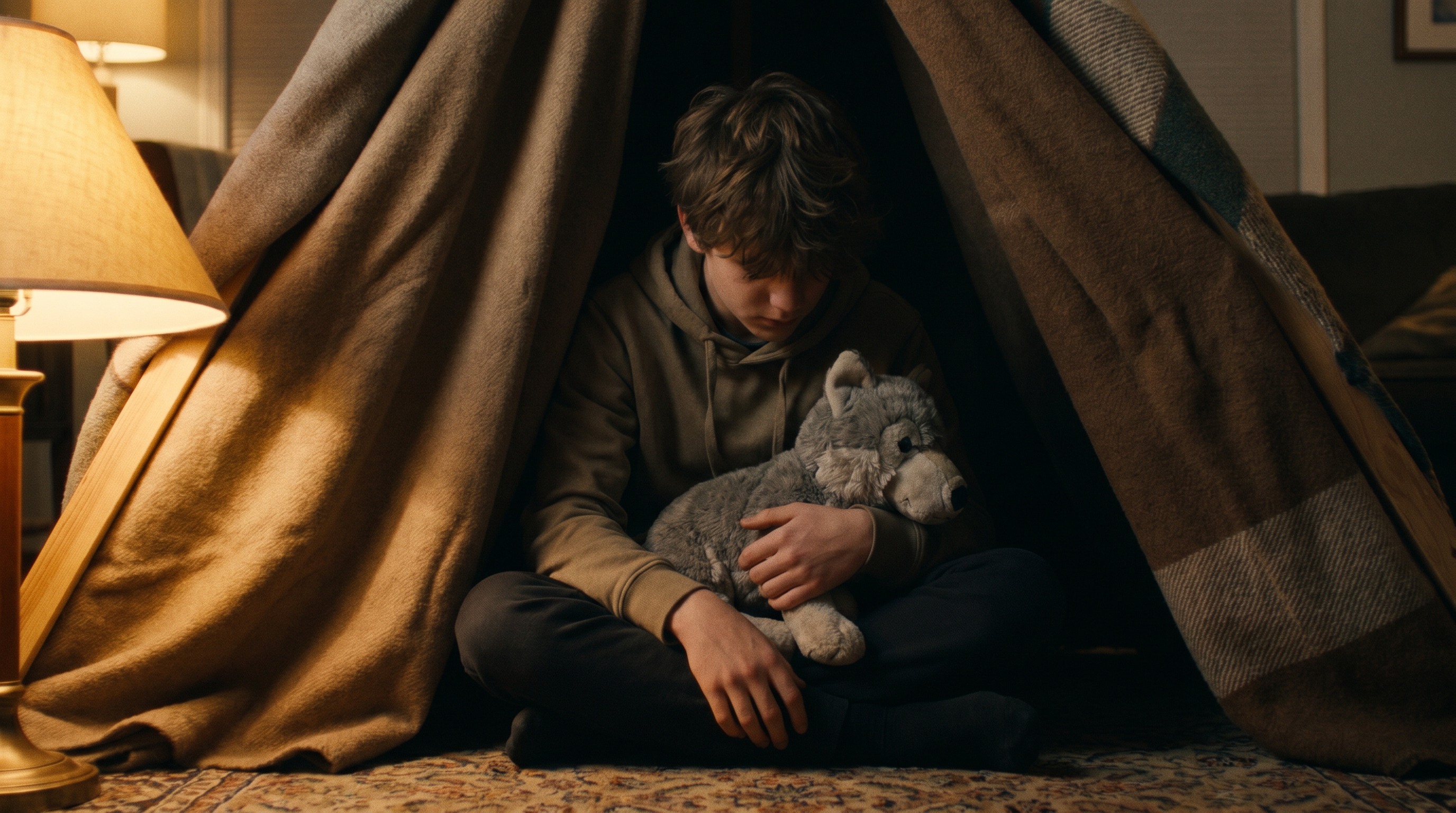
It also matters that this happened on a day Walter, by accident, was not in the room. Most of the time the plush wolf is the visible signal of self-permission — the small declaration that he has not agreed to disappear into his diagnosis. On this day, in his absence, Krisz had to be the signal himself. He was, in dino clothes and in plain language, in front of strangers in a brand-new oncology center. The wolf came home to a person who had already done the hard work of staying himself in the room without him.
This is why the post draft from that day is more than a treatment update. It is a boundary statement, and a small, quiet ethic for everyone standing near serious illness:
Do not hand people slogans. Stand next to them in the reality.
That is what we got this actually means.
Read more perspectives on this moment: